The metaphor of the “two books” is well known among Reformed people, especially through the work of John Calvin. Article 2 of the Belgic Confession also makes use of it. True, it does not speak of “two books” but of “two means” by which we know God. But it goes on to describe the first of these means, namely what we observe about God in nature, “as a most beautiful book,” much as Calvin did.
The fact that Scripture and nature have a common author has often led to the conclusion that there must be factual agreement between what Scripture and science tell us about the physical world, and it therefore goes a long way in explaining the efforts that have been made over the centuries to harmonize the two books. This was done in the past and is still being done today, both by young-earth creationists and by various Christians who hold to an older earth and cosmos. In her article “What General Revelation Does (and Does Not) Tell Us” [Perspectives on Science and Christian Faith (March 2010), v. 62, n. 1, pp. 16-24], Mary L. Vandenberg, who teaches Systematic Theology at Calvin Theological Seminary, evaluates this understanding of the two-books metaphor and finds it wanting.
She focuses on two questions in connection with the tradition, namely: “(1) How much concordance is there between what the Bible and science tell us about the nature of the physical world? and (2) how much concordance is there is between what the Bible and science tell us about God?” and answers that the two-books metaphor offers an answer only to the second question, not to the first. Rather than informing us about the structure, properties, and operations of nature, Scripture reveals (like nature) the existence, wisdom, and power of God. This is in accordance with the teaching of John Calvin, who, when speaking of the knowledge we can gain from the two books, “is especially addressing the knowledge of God available in nature and in the Bible, not knowledge in general.” Calvin was following the apostle Paul who wrote that “since the creation of the world God’s invisible qualities — his eternal power and divine nature — have been clearly seen, being understood from what has been made, so that men are without excuse” (Rom. 1: 20).
Calvin adds that because of the fall humanity is blinded and no longer able to see the evidence of God in creation, and that therefore God has graciously provided us with “spectacles,” namely his special revelation. If we use these spectacles, we will clearly see that the author of the book of creation is indeed God. It is not so, Vandenberg warns, that we need the lenses of Scripture for a proper interpretation of scientific data. “When we read the book of nature apart from the corrective lenses of Scripture,” she writes, “it is not that our scientific findings will necessarily go awry. Rather, the knowledge of God that can be obtained from the physical world will be corrupted.” In the words of geologist Davis Young, whom she quotes, “Christians have typically understood ‘general revelation’ as having to do with science. Again, however, the idea is not that data are divinely revealed but that God is revealed through the created order.”
Where do we go from here?
If Vandenberg’s analysis is accurate — and there seems to be little reason to doubt it — Christian scientists will be wise to dispense with the metaphor as a justification for concordist attempts. Scripture, which contains God’s revelation to people of all historical periods and all cultures, does not reveal to us the findings of modern science. To assume that it does is, to borrow an expression from C.S. Lewis, a blatant case of chronological snobbery — the belief that our period and culture and achievements are ultimate. If we want to find the properties of science, we have to turn to nature, not to Scripture. This is indeed common sense. It does not, however, answer the question which inspired the concordist use of the two-books metaphor in the first place — namely that concerning the relationship between the written Word and the discoveries of to-day’s science. That continues to be an urgent question. Vandenberg admits this when in her conclusion she writes that “some level of reconciliation between the findings of science and Scripture would, at the very least, be existentially helpful.”
I hope that this question will receive the attention it deserves also in our own Reformed community. When we are considering it, we will do well to keep in mind that throughout church history believers have, in the end, assumed the priority of science. To quote Peter J. Wallace, “In all of the historical debates regarding the relationship between science and theology, science has taken the lead in provoking theologians to reconsider their exegesis. The quest for harmonization with science has led theologians and pastors to reject the theories of a lucid moon and a solid raqi’a [firmament], and adopt theories of the four elements*, a spherical earth, heliocentrism, and Day-Age and Gap theories of the creation days. In none of these cases did the transformation begin with exegetical work. Exegetical arguments have invariably followed from philosophical and scientific arguments that caused the church to reconsider the traditional exegesis.” [Peter J. Wallace, “The Doctrine of Creation in the History of the Church” direct link; Wallace’s pieces are listed in our “Collected Papers”]
The question is urgent and difficult, not least in view of recent scientific findings in paleontology and genomics, yet the quest must continue. Whatever the outcome, we are well served by following Vandenberg’s twofold concluding advice. The first one is that theologians “should neither be too eager to reinterpret the Bible in order to make sense of the latest scientific data, nor too eager to disregard the findings of science in order to make sense of certain biblical texts. Rather, they should read with excitement the latest results of scientific inquiry. As Scott Hoezee writes, ‘Christians, of all people, can take proper, holy joy in such things, giving glory to God for a universe so wondrous and endlessly surprising.’” And scientists, she writes, “should not be overly anxious to reinterpret various biblical texts, the purpose of which is to offer humans saving knowledge of God, in an effort to harmonize the Bible with the findings of science…. The result of all our endeavours should be that we join with the ancient psalmist…who gazed at the starry skies and with wonder declared, ‘O Lord, our Lord, how majestic is your name in all the earth!’ (Psalm 8: 1, 9). In that way, the work of the scientist, the work of the theologian, and the work of any other vocation is identical: to bring glory to God.”
*This expression refers to the ancient Greek scientific understanding of the universe as consisting of four elements, namely earth, water, air, and fire. That understanding, Wallace says in this same piece, “was nearly universal among Christian commentators from the early church through the reformation, and remained the dominant paradigm throughout the seventeenth century among Reformed theologians.” He adds that one means of harmonizing this description with Scripture was to distinguish between the first three days which narrate the creation of the four elements: fire (light), air (firmament), water (seas), and earth (land); and the second three days which speak of the creation of things out of those elements.
Monday, June 11, 2012

Saturday, March 24, 2012
More about Origin and Operation Science
In their 1987 book entitled Origin Science,[1] Norman Geisler and Kerby Anderson introduced a distinction between ‘operation science’ and ‘origin science’. They argued that operation or empirical science handles regular events while origin or historical science deals with singular events.
This is the distinction that Dr. John Byl relies on when in a recent post he highlights the subjectivity of research into the past as opposed to the objectivity of research into the present. Dr. Byl writes: “The central point of my book was that scientific theory--particularly in origin (or historical) science--is highly subjective and driven by worldview considerations. A Christian epistemology should thus give prime weight to Scripture, logic and observation. Scientific theories, on the other hand, are fallible human constructs that should be evaluated in the light of the former.” Further, “The science used to build airplanes is of a rather different nature than the claim that man evolved from apes. To wit, we must distinguish between operation science and historical science:”[2]
Dr. Byl rejects origin science because it is stained by the subjectivity of worldview influences. The status of operation science is left unclear. Operation science is also fallible. Nevertheless it is placed beside Scripture as far more reliable than origin science. However that may be, he recommends, the better approach is to rely on Scripture, logic and observation. I have divided the problems with this approach into three groups. In Part A I argue that operation science is not a safe haven because it is as subjective as origin science. So why should one trust operation science? In Part B I will offer reasons for its trustworthiness. But this trustworthiness is not without limits. Part C concludes with some thoughts about the role of Scripture.
Part A: The subjectivity of operation science
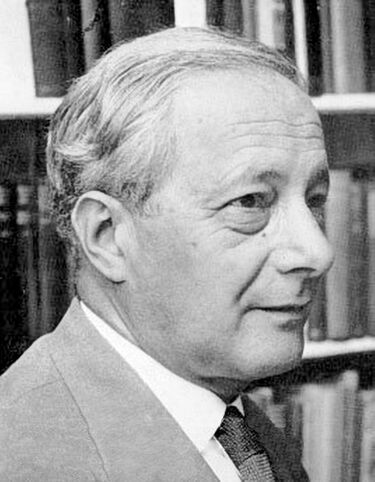
The distinction between research into the past and that into the present is one of degree, not of kind. Beginning with Hume, philosophers of science have acknowledged that scientific investigation of current events relies on past experience. This is known as the problem of induction. This simply means that human experience is limited in principle and that scientific knowledge has no absolute certainty. This holds for both origin and operation science.
 |
| Michael Polanyi |
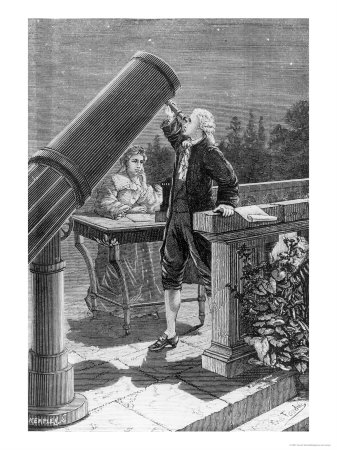
Observations in science can be classified into two groups – those predicted by theory and those made accidentally. Both types of observation are subjective because they are always seen in terms of what one already knows whether that is a theory or a worldview. I will deal with theory-guided observation below and focus here on the role of worldview. We can take the perception of pendulum movement in the Aristotelian and Galilean worldviews as an example from physics. The world according to Aristotle consists of earth, water, air and fire. A body falls according to the proportion of earth it contains because earth has the natural tendency to move down as opposed to fire which moves up. Thus the pendulum movement of a rock at the end of a rope is seen as falling with difficulty. In contrast, the late medieval philosopher-bishop Nicolas Oresme described the pendulum motion of the rock in terms of a force implanted in the rock by the person who gives it a swing (the ‘impetus’). Galileo adopted this view and saw a body that almost succeeded in repeating the same pendulum motion. This led him to see other properties of the pendulum on the basis of which he developed the law of independence of weight and rate of fall as well as the law of the relationship between vertical height and terminal velocity of motions down inclined planes.[4]
 |
| William Herschel |
 |
| Thomas Kuhn |
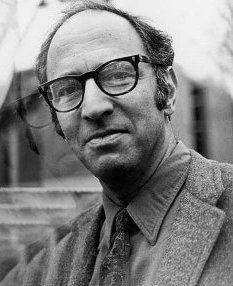
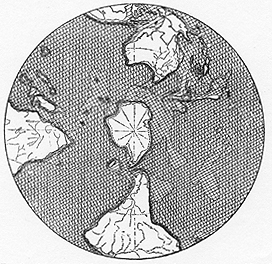
The theory of continental drift is a good example. Before its introduction by Wegener in 1912 geologists worked within a paradigm in which the continents were static. The anomalous observation was that the outlines of S. America and Africa matched like pieces in a puzzle. Moreover, the continents shared identical strata with identical fossils in them. These observations also applied to other continents. But there were no known forces that could move these continents apart. Geologists suspended judgment or rejected Wegener’s theory until the 1960s when new observations tipped the balance in his favour. For details, see this website.
Rejecting a theory or a paradigm may block research. Hence the second and third response to an anomalous observation. These responses occur because theory guides observation. It does so because a theory logically contains observation statements. These are the observations predicted by the theory. Such observations are logically inferred from the theory. When actual observations differ from the predicted one, the theory is rejected. Otherwise the theory is submitted to more tests. For example:
- Theory: All cats have five legs
- Deduction: My cat has five legs
- Observation: My cat has four legs
- Conclusion: Not all cats have five legs (rejected theory)
If my cat had five legs, then the theory would be considered acceptable. This means that for any given theory a large collection of potential observations remains out of sight because they are not logically implied by the theory. No one is going to count legs in horses. A theory is like a search light – it reveals a small circumscribed area and leaves the rest in the dark. There is no logical cure for this incompleteness because this is the nature of science both of the past and of the present. The need for observations to be relevant for a theory means that they are theory-laden. Observations are also worldview-laden as mentioned above.
Byl’s cursory mention of logic is unhelpful as it stands. If he means inductive logic, then he must remember Popper’s point that one cannot move logically from an observation to an observation statement since the former is a psychological event while the latter is a logical entity. If he were to disagree with Popper, his next problem would be that the conclusions will depend crucially on whether the observations were correct and complete. The role of theory just indicated virtually guarantees that the observations are incomplete. On the other hand, if Byl is referring to deductive logic the conclusions depend on whether the premises are correct and that in turn depends again on the completeness of the observations on which the premise is based.
Part B: The trustworthiness of origin science
The same applies to reconstructions of the history of life on earth. For instance, the evolution of fruit flies on the Hawaiian Islands has been reconstructed using chromosome mutations. The relative age of the islands has been determined by radiometric dating. The sequence of their formation by volcanic action has been established on the basis of the North-Western movement of the continental plate of which they are part. Chromosome mutations, radiometric dating and continental drift are mutually independent lines of evidence. They are also independent of any evolutionary paradigm. They all converge on the same reconstruction of the history of fruit fly evolution. For more on this example and on independent lines of evidence, see van der Meer, J.M. “Ideology and Science”, Reformed Academic, 16 August 2010 (links: full paper & introductory blog post).
According to Dr. Byl, “Operational science calculates forward, deducing effects from causes, whereas historical science calculates backwards, inferring past causes from present clues. One problem here is that more than one possible historical cause can give rise to the same effect.” This, however, is also a difference of degree, not of kind. In operation science, experiments aimed at changing the rate of movement of tectonic plates are as much beyond human possibilities as experiments in the past. Nevertheless, predictions are possible. This also applies to the history of pouched mammals (marsupials) mentioned by Sikkema. In that light Byl’s distinction between forward and backward prediction carries little weight in preferring ‘operation science’ over ‘origin science’. Moreover, in operation science there are an unlimited number of theories that can account for a set of observations just like in origin science more than one possible cause can produce the same effect.
In conclusion, Dr. Byl is incorrect in singling out origin science for its subjectivity. Operation science is just as subjective. This conclusion has earned Thomas Kuhn the reputation of being a relativist. The response of Feyerabend was to throw up his hands and say anything goes.[8] Still others such as scientific creationists have taken this as a licence to build a science with what they call a Christian content. These responses must be rejected from a Christian point of view. Here the doctrine of creation is essential. I believe that God created a reality that exists independent of human cognition. This means that we have the religious duty to try to eliminate the role of worldviews that direct us away from knowledge of this objectively existing reality. This is how a central theme in Scripture can shape science at the worldview level. It is worthwhile to put this conclusion in a wider perspective. There are two traditions in the interpretation of the Book of Scripture. In the biblicistic tradition the Bible plays a direct role. Texts are used out of context as source of scientific information about nature (geocentricity, Scriptural geology). In the perspectival tradition, on the other hand, the Bible serves indirectly by providing a general view or perspective on nature (nature as purposive, as contingent, as existing objectively). I recommend the latter because it does not fall into the mistake of treating Scripture texts as if they were intended to give information about nature that satisfies the standards of science.[9]
Part C: Scripture and science
In recommending the use of Scripture in historical science Dr. Byl overlooks the fact that the interpretation of Scripture suffers as much from subjectivity as science does. After all, subjectivity is a human characteristic. This may be seen in those cases where a faulty interpretation of Scripture shaped scientific understanding. In the history of biogeography, the belief that Noah’s flood was global was taken to imply that plants and animals had spread from a single centre on mount Ararat. This was used to account for their spread across the globe. But the facts could not be accounted for and so the information taken from Scripture was abandoned. Further, there was a theological debate in the sixteenth century about the incarnation, the details of which are beyond the scope of this article. But in that debate the anabaptist Menno Simons took the literalist position “that Levi was still in the loins of his father Abraham when Melchisedec came to meet him (Hebrews 7:10) as an indication that the father is the true origin of the child. The same point he found demonstrated in II Samuel 7:12, where David was told by God, ‘I will raise up your offspring after you, who shall come forth from your body.’” We now know that the father is not the sole origin of a child. In the history of geology, Neptunism – the school that tried to explain the features of the earth in terms of the action of water – was inspired by the story of Noah’s Flood. Despite far-fetched attempts by flood geologists no evidence for a global flood has been found.
Contemporary scientific creationism provides more examples. Dr. Byl writes: “The Bible makes clear that there can be non-material causes (i.e., spiritual beings can cause physical effects) and that God’s sovereignty over the world includes the possibility of miracles and changes in physical “laws” (e.g., perhaps during the creation week, after the Fall, at the time of the Flood, after the return of Christ, etc.). This in itself already negates the presumptions inherent in mainstream historical science.”
I agree that spiritual beings can cause physical effects and that God performs miracles. But Dr. Byl engages in stunning speculation when he suggests that changes in the laws of physics might have occurred during the creation week, after the Fall, and at the time of the Flood. This is what the use of the Bible as a scientific textbook leads to. On the one hand Dr. Byl insists that we should stick to the Bible for knowledge on the history of the laws of physics and of life on earth. On the other hand, he goes beyond what Scripture warrants and gives free reign to his imagination. How much better is that than the origin science he rejects?
 |
| Herman Bavinck |
[1] Grand Rapids, MI: Baker Book House, 1987.
[2] Byl, John. God and Cosmos: A Christian View of Time, Space, and the Universe. Banner of Truth, 2001.
[3] Brooke, J. H. (1991) Science and religion: some historical perspectives. Cambridge University Press. Cambridge; Van der Meer, J.M. Ed. Facets of Faith and Science. 4 vols. The Pascal Centre for Advanced Studies in Faith and Science / University Press of America. Lanham: 1996; Brooke, J.H., Osler, M.J., Van der Meer, J.M. (Eds.) Science in Theistic Contexts: Cognitive Dimensions. Osiris 16. University of Chicago Press. Chicago. 2001; Alexander, Denis R. and Numbers, Ronald L. eds. Biology and Ideology from Descartes to Dawkins. Chicago. University of Chicago Press: 2010.
[4] Galileo Galilei, Dialogues concerning two new sciences, trans. H. Crew and A. De Salvio. Evanston, Ill, 1946, pp. 80-81, 162-66). More examples in Kuhn, Thomas, The structure of scientific revolution, 2nd ed. University of Chicago Press, Chicago: 1970.
[5] Based on Kuhn, Thomas S. “Historical Structure of Scientific Discovery.” Science, 136 (3518) June 1, 1962, 760-764.
[6] Kuhn, Thomas S. “Historical Structure of Scientific Discovery.” Science, 136 (3518) June 1, 1962, 760-764.
[7] Young, Davis A., Stearley, Ralph. The Bible, Rocks and Time: Geological Evidence for the Age of the Earth. InterVarsity Press Academic, Downers Grove, Ill. 2008, Chs. 14 and 15. link review
[8] Feyerabend, P. Against Method. London: Verso, 1975.
[9] Van der Meer, J.M. “Interpreting Nature and Scripture: A New Proposal for their Interaction.” In: Christianity and the Human Body: A Theology of the Human Body. eds. Robert Brungs, SJ and Marianne Postiglione, RSM, The ITEST Faith/Science Press: St. Louis, Missouri. 2001, pp. 38-72.
[10] Bavinck, H. Reformed Dogmatics, Grand Rapids: Baker, 2003, vol. 1, p. 444; italics in the original.
Wednesday, March 14, 2012
Origin Science and Operation Science
It’s 7:45am and my middle-school-aged daughter, despite a few knocks on her door, still hasn’t appeared for breakfast. Since the bus comes in 25 minutes, I finally check her room, only to find she’s not there — or indeed anywhere in the house! Her jacket and shoes which I saw at the entrance last night are missing too. After a few calls to some friends, I phone the police. But by the time they arrive, I confess that my memories, my documents and photos, and the things in “her” room in my house do not prove that I have a daughter. And thus I decide to drop the matter, and go on living as if “my daughter” never really existed.
The shock you experience upon the reaction of the father in this little story is exactly what I and my scientist friends, Christian or not, experience when we’re told (by Christians!) that we can safely disregard all scientific evidence about the past.
For the last century or so, atheists have claimed that there is an absolute and irreconcilable conflict between modern science and the Bible. Surprising as it may seem at first glance, increasing numbers of orthodox Christians agree with these atheists. Of course, the reaction of the two groups differs. The first celebrates the great achievements and the rapid advances of modern science, using them as evidence of science’s truthfulness. The second group, on the other hand, attempts to cast doubt on any scientific theory that appears to be in conflict with Biblical revelation. This applies primarily to theories that claim a greater age of the earth and the cosmos than a literal reading of Genesis 1 and 2 seems to allow. Most other scientific theories — especially those that have important technological implications, are welcomed, but only because they are useful. The fact that science gives us an increasingly better understanding of the universe God created, that this knowledge enables us to magnify and glorify the Creator, and that the study of science is therefore an important part of the cultural mandate, is ignored.
To safeguard the conviction that, according to Scripture, the earth and the universe are only six to ten thousand years old while science claims ages amounting to billions of years, there is a tendency among Young-Earth Creationists to distinguish between “origin science” and “operation science”.
The claim that there is a sharp difference between these two is also found in John Byl, God and Cosmos: A Christian View of Time, Space, and the Universe (Banner of Truth, 2001). One of the main goals of that book, and of Byl’s writings in general, is to suggest that the claims of modern science about the history of the cosmos are irrelevant, so that Christians can be reassured that the so-called “traditional interpretation” of Scripture on matters of earth and cosmic history is correct. And so in the last pages of the book, one finds a commendation of a “distinction between origin and operation science… The latter is concerned with repeatable events, the former with singularities such as creation” (p. 213). [Note: For an insightful review of Byl’s book by a Reformed theologian, see C. John Collins, Presbyterion: Covenant Seminary Review v. 29, n. 1 (2003), pp. 56-59, available online via our “Collected Papers” or directly here.]
The idea is that “operation science” is a worthy enterprise, because we can do repeated experiments, while “origin science” should be dismissed because it relates to events of the past on which experiments cannot be done. That is, Christians are told they can safely ignore all results of scientific inquiry into the history of the cosmos.
What is Origin Science?
Science in our day is widely seen as having special authority, being a respectable and dependable source of knowledge. Many voices rightly acknowledge the limited character of science, for it is unable to speak to matters of value, purpose, meaning, beauty, morality, etc. It is true that some strident atheists claim the contrary and continue to press the notion that science is the only source of truth in all areas of life, but it is important to realize that this claim itself cannot be supported by science! Nevertheless, science does have significant validity particularly because of its systematic way of self-correcting through peer review and because of the worldwide community’s involvement, with scientists of all religions and cultures represented.
Because of this high regard for science, some wish to remove “origin science” from the field of science. The idea is that science is supposed to be experimental, and since origins looks back in time it deals with matters that cannot be reproduced in the lab and so should not be considered science. This includes especially the field of paleontology (studying the fossil record, including the use of radioactivity and geology) as well as astronomy, astrophysics, and cosmology (these deal with stars and galaxies whose light often takes many years to reach us). These are the disciplines, after all, which have been marshalling the evidence that life has been around for about ¾ of the earth’s 4.54-billion-year history, and that the universe itself is about 13.75 billion years old. And these ages are supposed to contradict a “plain sense” or “traditional” reading of Scripture.
Now, it is quite difficult to define exactly what science is, but its empirical character is indeed key. That is, theories in science are to be tested against the actual world. But does that mean science must be experimental and repeatable? Not really.
The Value of Historical Science
Our observations in the present, and collected observations over millennia past, can in fact help us to uncover features of the universe today, give us insight into past events, and even serve our neighbour. Continental drift is an example in geology. Multiple lines of evidence, with different observations, assumptions, and methods, lead to a common conclusion. Two years ago, the magazine Modern Reformation featured an article which gave details on how the spreading rate of the mid-Atlantic ridge matches the rock ages measured via radioactive decay. And this is all intimately coupled with our understanding of the dynamic structure of the earth (with its crust, mantle, and core), which is used routinely to measure earthquakes and save lives by sending out tsunami warnings.
Why Is Origin Science Considered Unreliable?
Some scientists, especially when making public pronouncements as high-priests for atheism, appeal to their audience by way of all kinds of proof claims. One hears arguments that because the big bang theory is solidly proven, people had better give in, get on board, and join in assent. There are two ways to address such claims.
One response is to deny that the big bang (e.g.) is proven. That is, we can quickly discard any theory, conclusion, or statement of origin science by pointing out that there is not, and can never be, any real proof of them; after all, they cannot be repeated in an experimental context. But this response is actually not helpful, and is in fact misleading. For the appeal against proof is in fact a misunderstanding or misrepresentation of the nature of science.
The appropriate response to dogmatic proof claims is to note that in science proof is not even in view. While in the field of mathematics, proving theorems within axiomatic systems is indeed a cornerstone, in science one works with theories and weighs evidence in favour of or in opposition to them. And so both the claim that science has proven something, and the claim that something has not been or cannot be proven, can be ignored. It’s not about proof!
Thus the claim that origin science cannot offer proof actually offers false comfort to those who feel threatened by the discoveries of modern science, especially as the rhetoric of warfare between science and Christianity has grown through the relentless efforts of both Young-Earth Creationism and what might be called the “scientific atheist” movement. One must instead replace the notion of proof within science to one of weighing the evidence.
Origin Science Does Not Exist
One distinction which is often not made is that between origin and history. Origin science per se does not actually even exist, except as a limit upon what science can hope to achieve, indeed a limit of which Christians in the sciences (or Christians speaking about science) ought to be acutely aware. It may be debatable among Christians whether studying the history of the universe or any feature of it has any value or reliability (I say it does have both), but science clearly does reach a point where nothing more can be said which is in any way amenable to the methods of scientific investigation. Where does something come from in the final analysis? What is its absolute origin? How did it come to be in the first place? Why does it have the particular characteristics it has? These questions are answerable in the ultimate sense only with reference to the specific creative work of God. Everything is contingent upon him. (Of course, God is to be acknowledged not just for creation, but also for his providential and covenantally faithful sustaining, and especially for his personal relationship with humanity.)
In cosmology, the big bang theory does not actually address the origin of the universe, but only its early development. No one claims to know why the big bang occurred, what triggered it, what conditions were present prior to it, either theoretically or observationally. In fact, cosmologists clearly state that they cannot address anything in the first 10−43 seconds: beyond the first tenth of a millionth of a trillionth of a trillionth of a trillionth of a second, nothing is known. Biology (especially through paleontology and comparative genomics) may investigate the historical development of living things, but cannot hope to make much progress in scientific investigations of the actual origin or existence of life due to the contingencies and singularities involved.
Every origin story in history (the origin of the universe, or of stars & galaxies, the solar system, earth, life, humanity, or you as an individual) can only be so by virtue of the cosmos being created by God with its divinely ordained lawfulness and coherence. This lawfulness and coherence can only be taken as a given without which science cannot function. But God is also personally involved in all events that occurred in history, as Scriptures clearly reveal. All is contingent upon him.
Past and Present Connected
And so perhaps people who refer to “origin science” just mean “historical science”, but let’s keep using their term.
 Enforcing a sharp distinction between origin and operation science would demand that we as humans can know nothing about the past at all, and by extension can know nothing in the present. All human knowledge relies upon past experiences, and while an individual person cannot be absolutely confident about everything he or she remembers, communities have a way of mutually reinforcing what occurred in the past. The idea that we must remain agnostic about the past from a scientific point of view is inconsistent with the God-given confidence we as humans can have in assessing anything at all. The origin-vs.-operation approach when taken consistently endorses a radical skepticism and extreme doubt. If I look out of my window and see a tree, or share personal memories with a friend over coffee, must I really immediately recognize that these perceptions could easily be caused by any number of other alternative realities which must equally be embraced? Sounds like post-modernism in hyper-drive!
Instead, we can trust that God has created and sustains this world as a true reality of which he graciously and faithfully allows us to have true experiences. We can be confident (not in the positivistic or triumphalistic sense, but appropriately qualified and tempered in a critical realist way), and not forever wallow in the pit of existential despair into which we are cast if we succumb to the irrelevant notion of proof.
If we abandon our connection with the past, as that approach actually demands by consistency, and if instead we trust only that which we can prove (which, of course, is nothing except within the limited axiomatic systems of mathematics), then we must forbid forensic science and witness interviews in police investigations, as well as archaeology, not to mention medical science, cartography, meteorology, genealogical records. We also lose Biblical revelation, as Christianity is a religion rooted in the history of God’s redeeming action narrated in Scripture. The Christian in today’s society, including in science, can gratefully acknowledge God’s goodness and faithfulness, apart from which we can do nothing, but because of which we can approach our calling, and indeed our whole life, with confidence in his sustenance and providence, and confidence in a reality he has created and upholds.
The Continuity of Origin Science with Operation Science
 |
| Remnants of a supernova first seen in 1054, though the explosion happened six to nine thousand years ago. |
Recently there was lots of publicity about an experiment that claimed to show neutrinos traveling faster than light. Most physicists did not have much confidence in this result for various reasons; one was the well-established special theory of relativity, and another was because of “origin science” in which we have experience with neutrino vs. light speed by studying star explosions from 170,000 years ago. The current status of the neutrino speed experiment in question is that a loose cable was found, calling into further doubt the original claim.
The point is that in both experimental and observational science, scientists employ the very same methods, habits, assumptions, expectations, tools, theories, principles, etc., and so it is not possible to maintain a useful distinction between them.
The Challenge of Origin Science
If a “traditional interpretation” of Scripture indicates that the universe was created in 4004 BC, much of what is discovered via historical science challenges this. Is our response going to be one of fear, or trust? This is God’s world, and we can humbly and boldly explore his creation as we are called and equipped to do, without resorting to radical skepticism or proclaiming that science can say nothing.
We at Reformed Academic are not interested in re-interpreting Scripture on the basis of modern science. But scientific discoveries can lead us to ask whether we have placed upon Scripture, perhaps due to earlier scientific or philosophical ideas, an interpretation which is not warranted by Scripture itself and which was not possible for its authors or first hearers. It is troubling that in our own Canadian Reformed community there are growing voices that adopt scientific creationism (and/or its methods, outlook, and conclusions) as if it is the stance required by Reformed Christianity; that approach gives false hope as it dangerously makes what is often pseudo-science the reason for confidence in Scripture. But we are encouraged that in the broader Reformed Christian community, which is arguably more in continuity with what our own Canadian Reformed community historically has accepted, there are such critical re-assessments.
What’s the Point?

Byl’s writings have been very influential in our circles, with pastors and teachers recommending his book to young people. A recent editorial in Clarion (“When Science and Scripture Clash”, 17 February 2012, pp. 78-81) also demonstrates Prof. C. Van Dam’s continued allegiance to the origin-vs.-operation science notion. Many scientists in the Canadian Reformed community have grave difficulties with this approach, and I hope this post (together with the incisive review by Collins referred to above) has shown its serious problems. While the results of modern science may be uncomfortable, it will not help to simplistically dismiss their claims as irrelevant on the basis of an indefensible distinction between “origin science” and “operation science”. Let us not lose sight of what we have learned about God’s awesome deeds of the past.
And, back to the (fictional) story I began with: Of course, I will look for my missing daughter! I’m not interested in proving her existence, but confident that God is good and faithful. And I have my responsibilities to attend to.
Subscribe to:
Posts (Atom)